
Tools & Equipment · Toolbox topic
Are you using the right tool?
Week of
A $70 drywall lift turned a shoulder-wrecking job into an easy one. Safe doesn't always mean slower. Before you muscle through it, stop and ask what tool was made for the job.
Read the Safety Minute transcript
Good morning, Gaftek. This is your safety minute for the week of November ninth. This week's topic is a simple question: Are you using the right tool for the job? Here's a story from Burnie this weekend. He and his son were putting up a plywood ceiling in a room at the house. They did it right. Staging set up, ladders in place, everything by the book. They got the first sheet up, and it was a fight. A four by eight sheet of plywood weighs forty to seventy pounds, and they were holding it over their heads, arms locked, standing on staging. It was hard on the shoulders, and if one of them had lost his grip or his footing, somebody was getting hurt. So they stopped, and they thought about it. Burnie drove to Home Depot and rented a drywall lift. Seventy dollars for the whole day, about an hour round trip, and the rest of that ceiling went up easy, low effort, probably faster than doing it by hand. They finished the whole job that same day. That one tool was built for exactly that job. It took the shoulder strain out of the equation. It took the fall off the staging with a sheet in your hands out of the equation, and the job got easier, not harder. Here's the point. A lot of us think working safe means working slower, less efficient, more expensive, and sometimes, yes, it does. But a lot of the time, the safe way and the easy way are the same way. You just have to stop long enough to see it. So this week, before you muscle through something, ask yourself three questions. What tool was made for this job? Is there a safer way to do it? Is there an easier way to do it? That might be a drum dolly instead of walking a drum, a lid lifter instead of your fingers, the right size wrench instead of a cheater bar, a ladder instead of a bucket. Most of you are out on service calls by yourselves. There's nobody there to hand you the right tool and nobody there to catch you if something goes wrong. You're the one making the call, so make it early. Before you leave the shop, look at the work order and ask, "What's this job going to need, and is it on the truck?" And if you get there and you don't have the right tool, stop and make a good decision. Go get it, rent it, or come back to it. An hour and seventy dollars is cheap. A torn shoulder is not. Work safe. See you next week.
We tend to think safe means slower, harder and more expensive. Sometimes it does. But a lot of the time, the safe way and the easy way are the same way. You just have to stop long enough to see it.
A story from this weekend
Burnie and his son were putting up a plywood ceiling at the house. They did it right: staging set up, ladders in place, everything by the book.
The first sheet was a fight. A 4x8 sheet of plywood weighs 40 to 70 pounds, and they were holding it overhead, arms locked, on staging. Hard on the shoulders. One slip and somebody was getting hurt.
So they stopped and thought about it. A drive to Home Depot, a rented drywall lift, and the rest of the ceiling went up easy, with low effort, and probably faster than by hand.
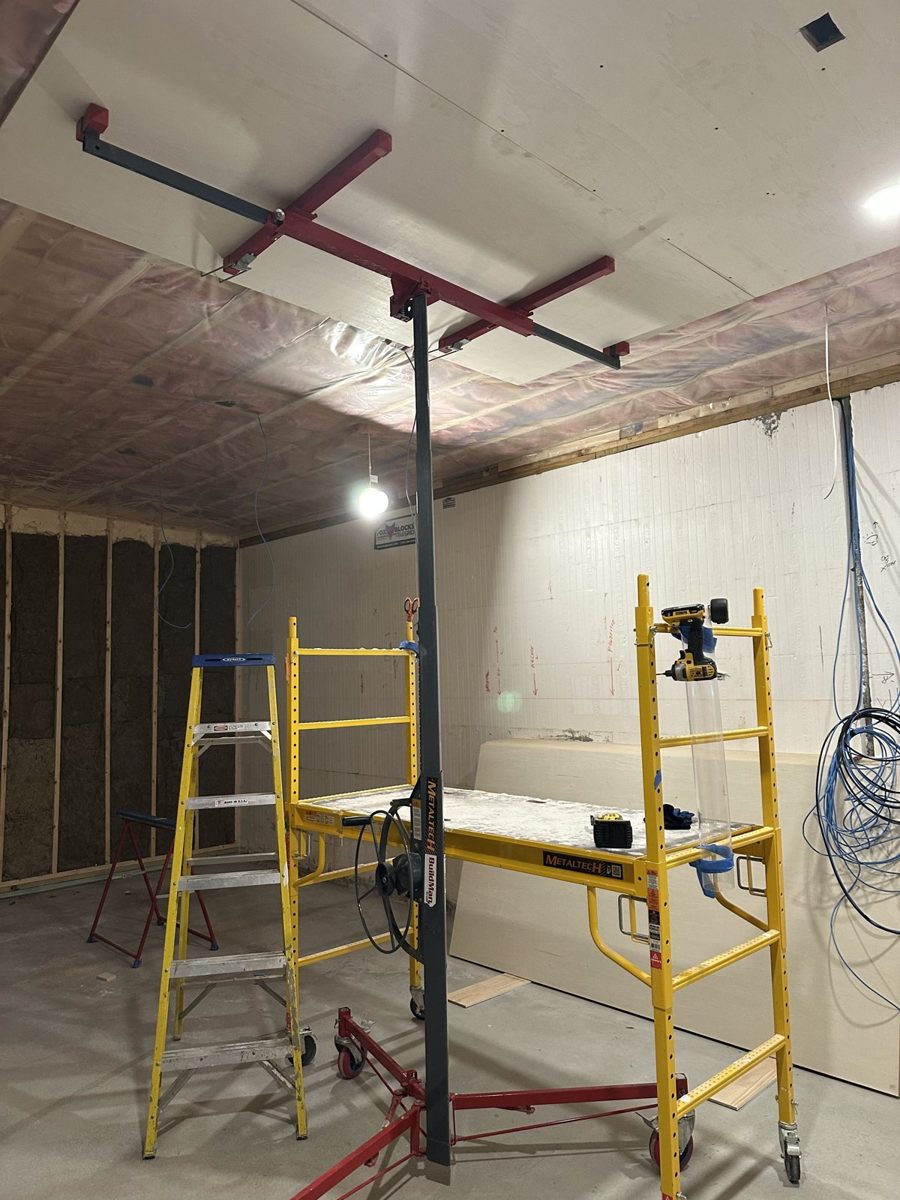
The $70 rental that finished the job.
- $70 to rent it for the whole day
- 1 hour to go get it
- 1 day to finish the whole ceiling
- 0 strained shoulders, 0 falls
Why it matters
That one tool was built for exactly that job. It took the shoulder strain out of the equation. It took the fall off the staging with a sheet in your hands out of the equation. And the job got easier, not harder. Brute strength would probably have gotten the ceiling up. It also could have cost a shoulder.
Before you muscle through it, ask 3 questions
- What tool was made for this job? Not the one in your hand. The one built for exactly this.
- Is there a safer way to do it? Take the strain, the awkward reach and the fall out of the equation.
- Is there an easier way to do it? Easier is often faster. Brute strength is rarely the best plan.
Brute force vs. the right tool
| Instead of… | Use… |
|---|---|
| Holding a sheet overhead by hand | A drywall or panel lift |
| Walking or rolling a full drum | A drum dolly or drum truck |
| Fingers or a screwdriver under a manhole or sump lid | A lid lifter or manhole hook |
| A cheater pipe on a wrench | The right size wrench, or a bar rated for it |
| Chrome sockets on an impact gun | Impact-rated sockets |
| A bucket or tank top as a step | The right ladder or a work platform |
Working solo? You make the call.
Most of our service calls are one person, one truck. Nobody is there to hand you the right tool, or to catch you if something goes wrong. If it isn’t on the truck, stop and make a good decision: go get it, rent it, or come back to it.
An hour and $70 is cheap. A torn shoulder is not.
Before your next service call or project
- Look at the work order before you roll: what will this job need, and is it on the truck?
- What job this week are you planning to do by muscle?
- Is there a tool we own, or could rent, that was built for it?
- What tool have you been using for something it wasn’t designed for?
Work safe.